Understanding Fenland Dialect and Place Names
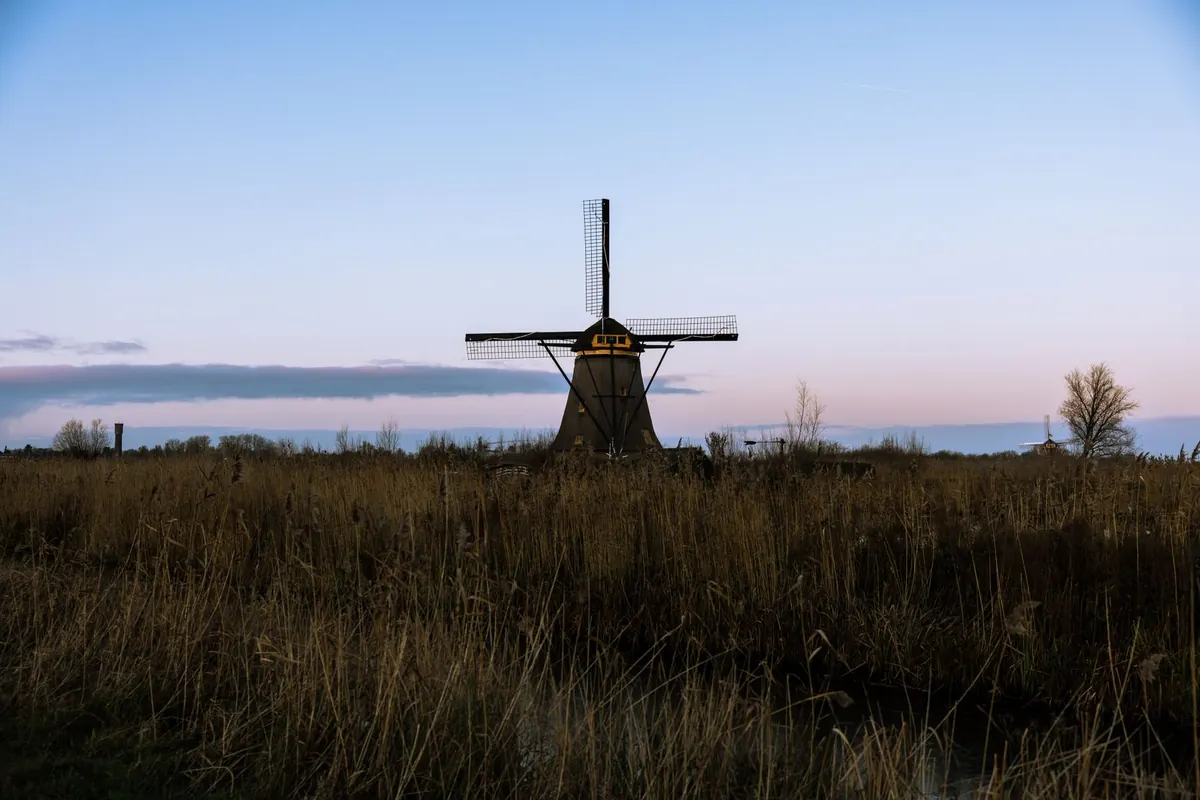
Ask a fenland farmer the way to the pightle beyond the old delph and you will get an answer in two languages at once: English, and the older vocabulary of a drowned, drained, endlessly worked-over landscape. Fen speech is not a museum piece. It is the working language of people who have lived with water coming and going, and much of it survives on the map itself — the -eys, -lodes, -droves and -tons that make a fenland address sound like nowhere else in England.
You do not need a glossary to enjoy it. You need a map, a pair of ears and the willingness to ask. Here is how the speech is shaped, which words are worth knowing, and what the place names are quietly telling you.
Fenland sits where East Anglia meets the East Midlands, so the accent shifts as you travel. Around Wisbech and Downham you will hear something close to Norfolk; up towards Spalding and Boston you will hear a flatter, more Lincolnshire edge, with short vowels and a habit of clipping the ends of words. In between, in the villages strung along the silts and the old fen edge, you get a mix: a Norfolk sing-song in one sentence, a Midlands flatness in the next.
The vowels are the giveaway. Fenland speech often rounds and lengthens where standard English tightens. A "boat" can sound almost like "boot"; a "stone" can drift towards "stun". Consonants soften at the edges: "t" becomes a glottal stop in the middle of words, and "th" can turn into "f" or "v" in the old working vocabulary. Grammar, too, has its own logic. You will hear "I be" for "I am", "he do" for "he does", and "they was" without apology. It is not careless English. It is a local system, learned from parents and neighbours, and it carries the rhythm of the Fens: slow, flat, deliberate, like water moving across a drain.
Some of that sound comes from the work. A farmer walking a drove, a wildfowler setting decoys on the Wash, a bargeman waiting for the tide at a staithe — each trade left its own words. The result is a dialect that can be precise about things outsiders never need to name. There is a difference between a lode and a dyke, between a delph and a drain, between a pightle and a close. If you grow up with those distinctions, you use them without thinking. If you move in, you learn them one at a time.
Here is a short starter glossary. None of these words is obsolete; you will still hear them in pubs, on farms and in local history groups. They are the everyday furniture of fenland speech.
Notice how many of these words are about water, land and boundaries. That is the heart of fenland life. The Fens were not simply drained once and forgotten; they are pumped, sluiced, banked and re-drained every generation. The vocabulary had to keep up.
Place names are the dialect written down. They are older than the accent you hear today, and they often preserve words that have dropped out of speech. If you learn a handful of elements, the map of the Fens starts to read like a sentence.
Names ending in -ey or -ea usually mean an island or dry ground in a wet landscape. Before drainage, the Fens were a maze of flooded meres, peat islands and low ridges. Ely, Ramsey, Thorney, Whittlesey, Sawtry and many smaller names all mark places that were once genuinely surrounded by water, at least in winter. When you see an -ey, you are seeing a refuge: a place where people could live, graze animals and build.
Water names are everywhere. -lode marks a waterway, as in Lode or the many Lodes around Waterbeach and Wicken. -dyke and -dike mark a bank or channel, from the Old English dic and reinforced by Dutch engineers. -fleet means a creek or inlet. -staithe marks a landing place. -drove marks a track for livestock. Put them together and you get a working map: where boats tied up, where cattle walked, where water was controlled.
Many fenland villages end in -ton, from Old English tun, meaning an enclosure, farmstead or village. Others end in -ham (homestead), -worth (enclosure), -thorpe (a secondary settlement, often Norse), -by (farm or village, also Norse), -cote (cottage), -gate (street or way), and -stow (a holy place or meeting place). The mix tells a story of Angles, Saxons, Danes and later Dutch and Flemish engineers, all leaving their mark on a landscape that was never quite solid.
“The Fens are not empty. They are full of names for water, and every name is a memory of a battle with it.”
Some names are more poetic than practical. Wash comes from an old word for a tidal flat or ford, and the Wash itself is a reminder that the sea has always been a neighbour. Mere means a lake; fen means marsh; moor means waste or marshy ground. When you string them together — as in “Fen End,” “Moor Drove,” “Mere Bank” — you are reading a description, not just an address.
Fenland dialect has survived because the Fens are still, in many ways, a place apart. They are flat, sparsely populated and criss-crossed by drains rather than main roads. Farming, fishing, wildfowling and engineering have kept people outdoors, working with their hands and talking to each other across fields and waterways. That kind of life preserves words. It also borrows them: Dutch and Flemish engineers brought dyke, sluice, delph and lode; Norse settlers left thorpe and by; East Anglian neighbours contributed mawther and bor.
It is not frozen, either. Younger people may not use every word, but they still recognize them. Local radio, dialect poetry, museum displays and social media groups keep the vocabulary visible. The accent softens and shifts, as all accents do, but the place names do not change easily, and they carry the old words forward.
If you want to get closer to fenland speech, you do not need to become a linguist. You need to be curious and patient.
Above all, resist the urge to correct. Fenland dialect is not bad English. It is a regional variety with its own history, and it belongs to the people who use it. The best way to understand it is to treat it as a living language — one that is still shaping the way people name the land they live on.
So next time you see a sign for a pightle, a lode or a drove, pause. You are not just reading a place name. You are hearing an older conversation between people and water, and it is still going on.
Photo: Arturo A / Pexels