Fenland Windmills and Drainage Mills: A Visitor's Guide
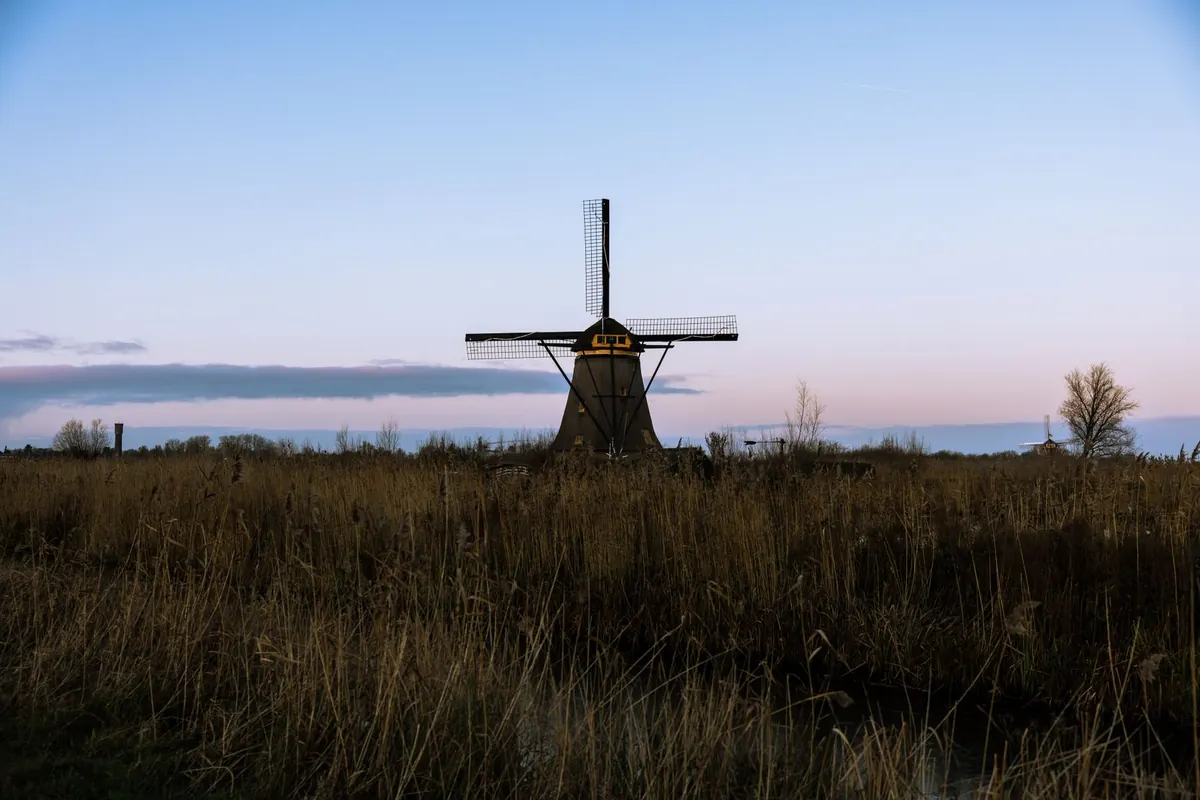
Stand on almost any drove-side bank in the Fens and the horizon is a long, flat line broken only by willows, a distant church tower and, if you are lucky, the tall black silhouette of a drainage mill. These mills never ground corn. They lifted water — slowly, patiently, a few feet at a time — from dyke to lode and from lode to river, so that the land you are standing on stayed dry enough to farm.
Many have gone. Those that remain are worth a journey, and a little understanding makes the visit far better.
A corn mill and a drainage mill look similar from a distance, but they were built to do opposite jobs. A miller grinding wheat needs speed: fast stones, fine gearing, sails that spin briskly. A drainage mill needs torque and volume. It is lifting enormous quantities of water through a very small height — often no more than four or five feet — and it does so with a large, slow-turning scoop wheel sitting in a brick-lined pit at the base of the mill.
That is why Fenland drainage mills tend to have broad sails, heavy gearing and a squat, powerful look. Stand beside the wheel pit at a working mill and you will hear the water before you see it: a steady, muscular slosh as each scoop lifts and tips. The wheel discharges into a headrace, and from there gravity does the rest, carrying the water to a pumping station or a tidal sluice and out to sea.
A lode is an artificial watercourse. A dyke or drain is the smaller channel between fields. A scoop wheel is the big paddle wheel that lifts the water; some later mills used a turbine or centrifugal pump instead. An engine drain is one cut specifically to carry water to a pumping station, and the name often survives on maps long after the engine has gone.
The Fens were never one impassable swamp, but the great drainage schemes that shaped the modern landscape began in the seventeenth century, when Dutch and English engineers — Cornelius Vermuyden is the best-known name — cut straight channels such as the Bedford rivers and embanked the Great Ouse. Getting water off the land was only half the problem; keeping it off meant pumping, and the earliest pumps were driven by horses walking in circles on a gin.
Wind replaced horses through the eighteenth and nineteenth centuries. Hundreds of smock and tower mills went up along the banks, each serving a defined catchment. Then steam arrived. The old steam pumping stations, with their tall chimneys and beam engines, could run whatever the weather, and a windmill that stood idle on a calm day was no use when a flood was coming. Diesel and then electric pumps finished the job.
What followed was a slow retreat. Sails were stripped, stocks rotted, caps fell in. Some mill bodies became stores, sheds or, more recently, houses. Rescue came largely from volunteers: county windmill trusts, the National Trust, English Heritage and countless local groups who rebuilt caps and re-boarded sails, often one fundraising appeal at a time.
Post mills, with the whole body pivoting on a central post, are mostly corn mills, though a few were pressed into drainage work. If in doubt, look at the base: a great brick wheel pit and a channel running away from it means water, not grain.
Wicken Fen, run by the National Trust, is the easiest introduction: a restored wooden wind pump in a landscape of sedge and reed, with paths that let you walk right up to it. Near Burwell, the village museum keeps a smock mill, and at Stretham the Old Engine of 1831 shows what replaced wind power. Prickwillow, just over the Suffolk border near Ely, is the place to understand the diesel era, with a collection of engines in a former pumping station.
Denver Windmill, near the sluice of the same name, is a fine restored tower mill. On the Broads, Horsey Windpump, Thurne Dyke Windpump and Boardman's Drainage Mill at How Hill give you three very different mills, all reachable on foot or by boat. Stubb Mill at Hickling is as famous for its winter roost of marsh harriers and cranes as for its sails.
Herringfleet smock mill, on the Waveney near Somerleyton, is a rare survival of a drainage mill on a grazing marsh. Further south, Thelnetham and Saxtead Green are corn mills rather than drainage mills, but both repay a visit. In Lincolnshire, the surviving windmills — Sibsey Trader, Maud Foster, Moulton, Heckington — are overwhelmingly corn mills, a reminder that the county's drainage was largely handed to steam and diesel early.
Aim for two mills in a day, not five. The pleasure of these buildings is in the looking and the listening — the creak of a cap turning into the wind, the clatter of gearing, the sound of water going where it should not naturally go. Plan around one good mill and a walk beside it, and the Fens will make sense in a way no map quite manages.
Photo: Bráulio jardim / Pexels
Previous Post
Fenland Village Halls: What's On and How to Book
Next Post
Understanding Fenland Dialect and Place Names